Early Career Researcher Network: key information for ECRs
The ECRN is UK-wide

The Early Career Researcher Network (ECRN) has been gradually expanding. We are delighted to have reached our objective to create ECR support across the country.
We now operate in nine regional clusters: South West and South Wales, Midlands and Mid Wales, North West and North Wales, Scotland, North East and Northern Ireland, Yorkshire and Humber, East of England, South East, and London.
The British Academy is working with institutions in these areas to deliver the Network. To read more about the pilot phase and how the Network has progressed over the last few years, you can read the evaluation.
Membership and benefits
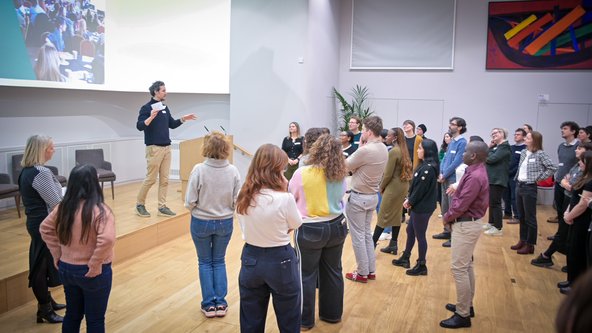

Early Career Researcher Network (ECR Network) eligibility
To take part in the Early Career Researcher Network, you must meet the following eligibility criteria:
- Identify as an early career researcher - we define an early career researcher as someone who has completed their PhD qualification or has equivalent research experience.
- Identify as a researcher in the SHAPE disciplines (the humanities and social sciences) including associated performance and creative disciplines.
- Be currently or primarily based in the UK.
We welcome both staff on teaching-only contracts who identify as research-active and practice based researchers and academics.
We welcome those who have completed PhDs, typically within ten years of award, but allow flexibility for those who have had career breaks.
For those undertaking PhDs, please do get back in touch once you have completed your PhD.
The Network is now nationwide, meaning ECRs across the UK can be part of this growing community irrespective of where you're based in the UK. Find out more about our regional clusters.
Please do get in touch if you have specific eligibility questions by contacting [email protected]
Membership engagement and flexibility
The Network places no expectations on members regarding the level of their involvement. Early career researchers are free to engage as much or as little as they wish. Ultimately, members get out what they put in, and it is entirely up to each individual how they choose to make use of what is on offer.
Member access and opportunities in the Network

The Early Career Researcher Network offers members a range of exciting resources. ECRs have access to online and in person activities and opportunities hosted by:
- The British Academy,
- other funders,
- research institutions across the UK,
- specialists across a range of thematic areas, and
- disciplines and ECRs themselves.
As members, you'll also have access to the exclusive British Academy Early Career Researcher Network online community platform. Members can use this community platform to access online resources, exclusive opportunities and search a directory of over 3500 academics to create connections – allowing ECRs to enhance their professional networks and nurture new and successful research collaborations.
Process and governance
Understanding regional clusters within the Network
A cluster refers to a university or group of universities selected to work with the Academy to support the effective delivery of the ECR Network. Each cluster provides support to both the Academy and researchers at a 'regional' level. It does not direct researchers’ activities; rather, it helps the Academy to meet the needs of early career researchers across the UK. The term cluster does not imply a single physical location, nor does it suggest that activities are centralised.
The Network has nine clusters: South West and South Wales, Midlands and Mid Wales, North West and North Wales, Scotland, North East and Northern Ireland, Yorkshire and Humber, East of England, South East, and London.
The members of each cluster are listed on our ECRN clusters page. See also the British Academy's privacy policy. For more information on how we handle members data, see the Network's data-sharing principles.
Handling of personal data
The British Academy, institutions and regional clusters process and share data in accordance with the UK Data Protection Act 2018 and the UK General Data Protection Regulation (GDPR). For further information, see the network's data-sharing principles.
Network growth
The first cluster was opened in the Midlands (now Midlands and Mid Wales) at the end of September 2021 and researchers were invited within the region to register to join the network.
Since then, The British Academy has been gradually launching across the country and has established eight further clusters within the UK. The network continues to grow and is now made up of thousands of members.
Purpose and impact
What the British Academy is doing to help Early Career Researchers (ECRs)
The British Academy established the Network for researchers who represent the future of the humanities and social sciences. We aim to support and strengthen your skills and networks so you can better compete in a challenging job market.
Through the ECR Network, the Academy wants to foster the best talent to pursue a future within research by encouraging and supporting those from diverse backgrounds across the UK.
Why the British Academy invests in this Network
The aim is to offer all researchers who join the Network access to the following:
- Personal skills development – Skills such as leadership, project management, communications, and media training etc.
- Research skills development – Opportunities to present new research ideas and share findings.
- Building contacts with experienced academics – The Academy has over 1800 Fellows who at times act as mentors for ECRN members, especially for those with limited institutional support.
- Building research collaborations across disciplines to address common challenges together – The Network brings together researchers from different disciplines, universities and backgrounds at symposium and workshop events (online or in person).
- Exploring issues key to ECRs (such as equality, diversity and inclusion) – The Academy offers members the opportunity to explore key issues through peer-led round tables, facilitated by a Fellow of the Academy or other sector experts.
- Engaging in discussions and debates relevant to academia and higher education – The Academy invites speakers from academia, policy, higher education, or interactive workshops to explore an issue in depth.
- Networking outside of academia – The Academy has built relationships with organisations in the private and public sectors and varying industries.
The Network benefit the Higher Education sector
The ECR Network will help researchers access important information about the skills, experience and behaviours that research leaders should be developing throughout their careers.
It will help to nurture talent in areas of teaching and research where provision has traditionally been limited, and which the British Academy has previously sought to address through the election of Fellows and the award of specialist research funding.
In line with the government’s own Research & Development People and Culture Strategy, published by the Department for BEIS in July 2021, it will also provide academic researchers with greater opportunity for involvement in policy development, increasing the influence of the country’s research.
Challenges facing early career researchers
We know from our conversations with researchers that there are a range of challenges and uncertainties for those in the first few years of life as a researcher.
It is a critical period in which to develop relationships and establish support mechanisms to enable a successful and sustained career.
We hope the ECRN will provide opportunities to strengthen skills and build networks so that individuals can reach their full potential.
Support for ECRs
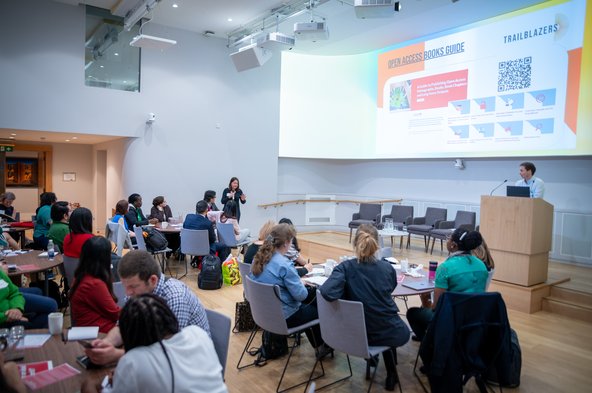
The Academy will support ECRs to set their own agendas as members of this network in line with their priorities. Priorities vary from one individual to another, and according to the British Academy / AHRC 2014 survey, ECRs in the higher education sector regarded 'advice with preparing grant applications', 'time to publish', and 'mentorship' as the most beneficial forms of support in their career development.
The British Academy will provide opportunities, both regionally and nationally, from skills training to networking, providing links to leading academics and other senior leaders.
In the long-term the Academy hopes that this will contribute to a joined-up response that brings together the Higher Education and research sectors and ensures that ECRs’ priorities are addressed as they change and develop.
Our partnership with the Wolfson Foundation
The British Academy is working in partnership with the Wolfson Foundation to coordinate a UK-wide network for ECRs in the humanities and social sciences. The Wolfson Foundation had initially agreed to support a two-year pilot of the network (April 2021-March 2023), but after a successful evaluation took place, the Wolfson Foundation has agreed to work with us for a further three years.